Vanity Materials Compared: Ceramic, Quartz, Wood, and Concrete
Every vanity material looks good in product photos. The differences show up six months in — when hair dye hits the surface, when the humid summer arrives, when you clean for guests. This guide compares the four materials we build with, honestly, including the maintenance each one actually demands.
Ceramic: The Low-Effort Workhorse
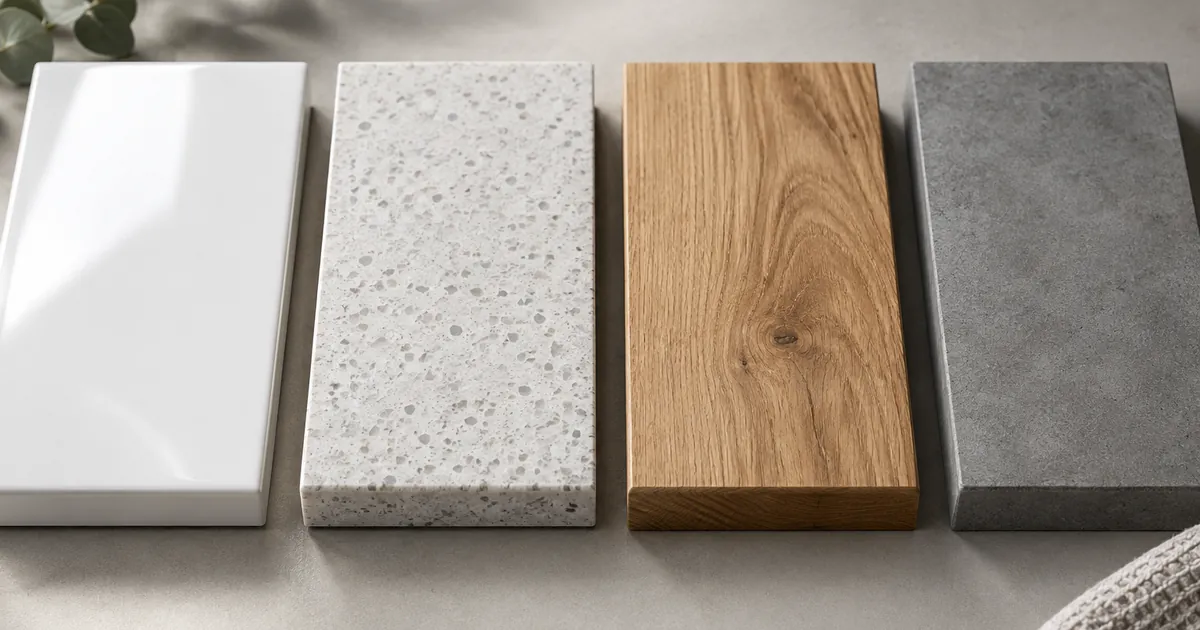
Glazed ceramic is fired to a glass-like surface: non-porous, stain-resistant, and hard enough to shrug off most cosmetics and toothpaste. Water beads on it, soap residue wipes off with a damp cloth, and nothing in a normal bathroom chemically attacks it. An integrated ceramic basin — top and basin molded as one piece — removes the seam and caulk line where grime usually collects.
The honest trade-offs: ceramic can chip if struck hard (a dropped razor corner will mark it), and the gloss shows hard-water spots in areas with mineral-heavy supply. A weekly wipe with a soft cloth and mild cleaner keeps it flawless; abrasive pads dull the glaze over time.
Choose ceramic if you want the lowest-maintenance surface and a clean, bright look. It dominates our single-sink collection for good reason.
Quartz: The Consistent Performer
Engineered quartz blends natural stone aggregate with resin, producing a surface with the look of stone and better stain behavior than most natural stones. It doesn't need sealing, resists acids better than marble ever will, and its pattern consistency means the sample you see is the slab you get — the 48-inch quartz-top vanity shows the finish well.
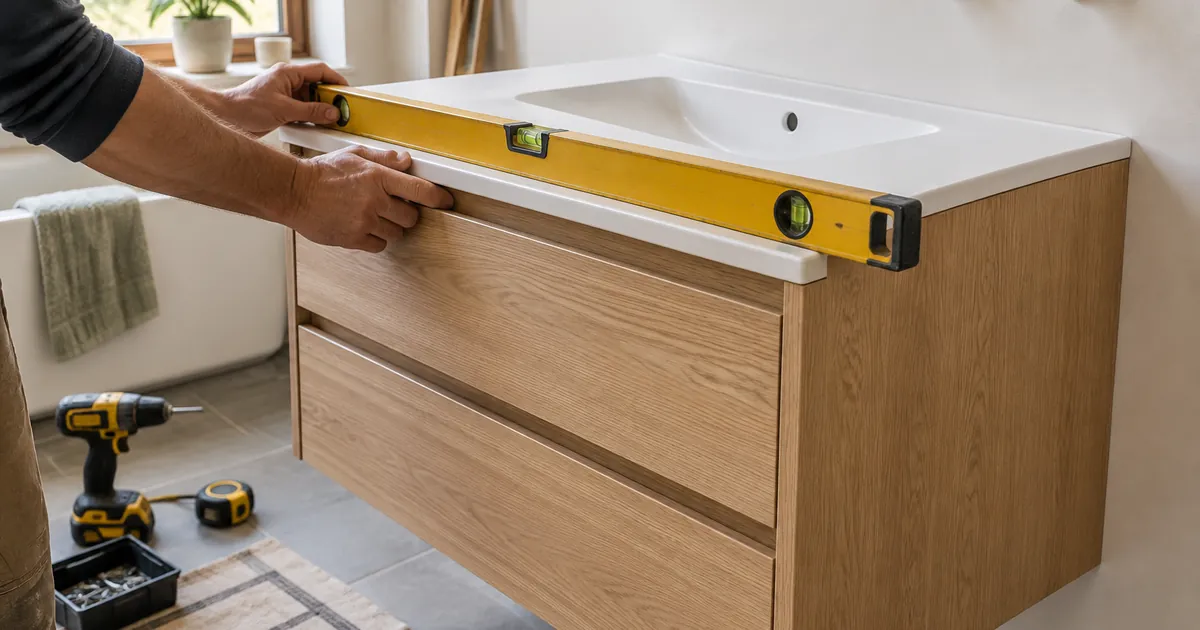
Trade-offs: quartz costs more, weighs significantly more (check cabinet framing and floor loading in upper-story installs), and sustained heat can discolor the resin — a curling iron rested on the edge is the classic mistake. Care is simple: mild cleaner, soft cloth, no abrasives needed.
Choose quartz if you want stone aesthetics with minimal upkeep and don't mind paying for it.
Solid Wood: Warmth With a Condition
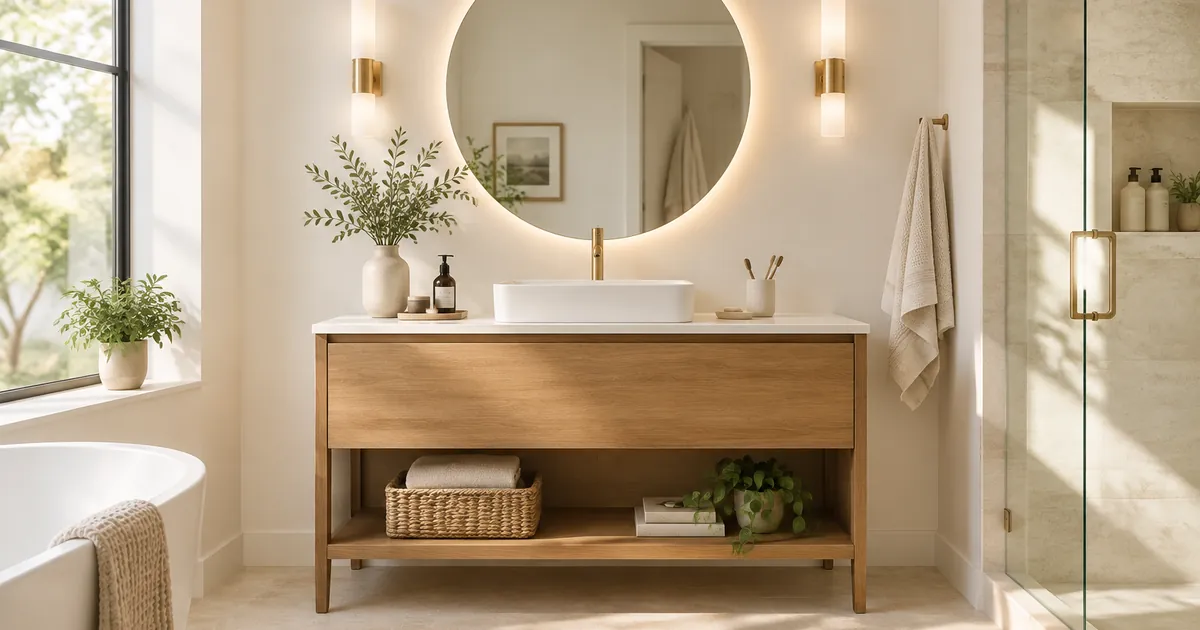
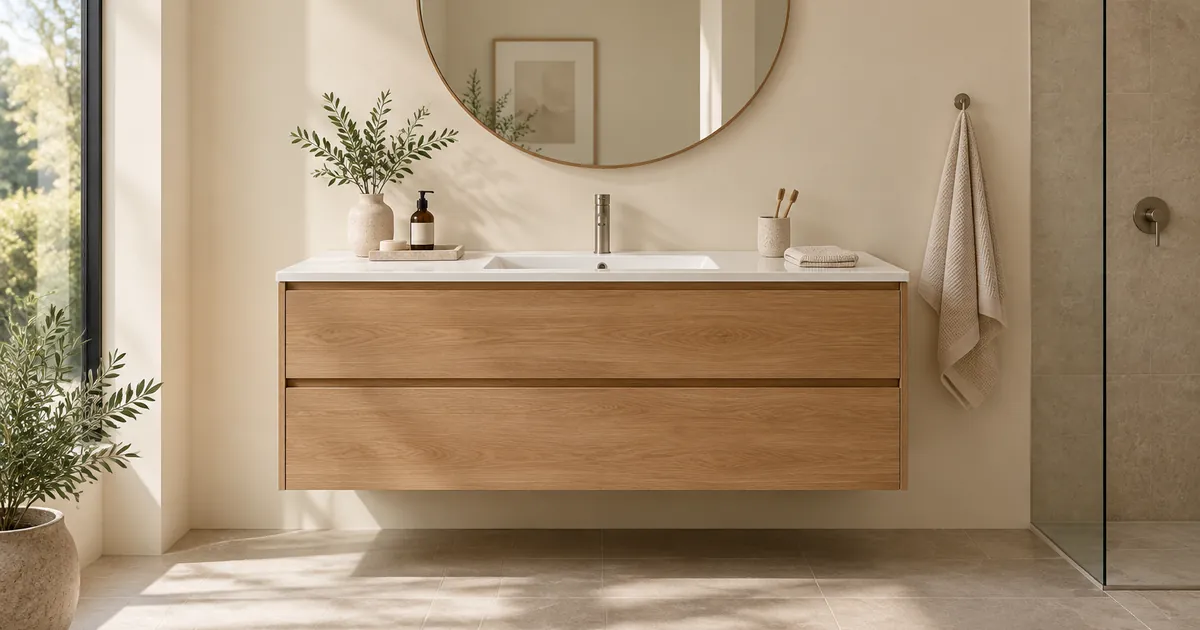
Wood brings what no stone can: warmth, grain, and repairability. Scratches sand out; dents steam out; the surface ages instead of degrading. The condition is moisture management. Cabinet-grade wood in a bathroom needs a quality sealed finish, and the seal needs inspection where water pools — the basin rim and the back splash line. Our rustic oak vanity and solid oak floating model use sealed finishes rated for bath environments.
Maintenance reality: wipe standing water promptly, refresh the seal every few years depending on use, and avoid oil-based cleaners that can soften some finishes. In a well-ventilated bathroom, sealed wood performs reliably for decades — it's been the material of choice in European bathrooms for generations.
Choose wood if warmth and character matter and you don't mind an occasional maintenance hour. Explore the oak floating vanities.
Sealed Concrete: The Modern Statement
Concrete delivers a matte, mineral, architectural look nothing else mimics. Sealed properly, it handles bathroom humidity well and its heft feels substantial — the gray concrete vanity is the clearest example in our range.
The honest trade-offs: concrete is porous under the seal, so the sealer is the system. Plan on resealing every 12 to 24 months — a 30-minute task. Highly acidic products (vinegar-based cleaners, some toilet bowl cleaners splashed over) etch unsealed spots. Hair dye and oil can stain if left to sit. None of this is difficult; it's just a real maintenance cadence.
Choose concrete if the industrial-modern look is the point and an annual resealing fits your habits. See the concrete-top vanities.
Side-by-Side Summary
- Stain resistance: ceramic ≈ quartz > sealed concrete > wood
- Scratch repairability: wood > concrete > quartz > ceramic
- Maintenance cadence: ceramic (weekly wipe) < quartz (weekly wipe) < wood (seasonal check) < concrete (annual reseal)
- Weight/floor load: wood ≈ ceramic < quartz ≈ concrete
- Cost: ceramic < wood ≈ concrete < quartz
One Practical Recommendation
If you're torn, match the material to the room's ventilation and the household's habits. A well-ventilated master bath with careful users can run any material happily. A windowless kids' bath takes constant abuse — ceramic or quartz will look better, longer, with less effort from you.
Every material we ship includes care instructions in the box, and our team answers material questions through the contact page. Browse the full vanity catalog — all orders ship free in the United States.