Floating vs Freestanding Vanities: Which One Fits Your Bathroom?
The single biggest fork in the vanity-buying road is also the least discussed: does the cabinet sit on the floor or hang on the wall? Both floating vanities and freestanding vanities hold the same sink, the same plumbing, and the same drawers — but they install differently, clean differently, and suit different rooms. Here's an honest comparison from both sides.
Installation: The Real Difference
A freestanding vanity is the forgiving option. It levels on its own feet, hides the plumbing behind a cabinet base, and works with standard rough-in heights. One person can position it, level it, and anchor it to the wall in an afternoon. If your drain and supply lines are in a standard location, nothing needs to move.
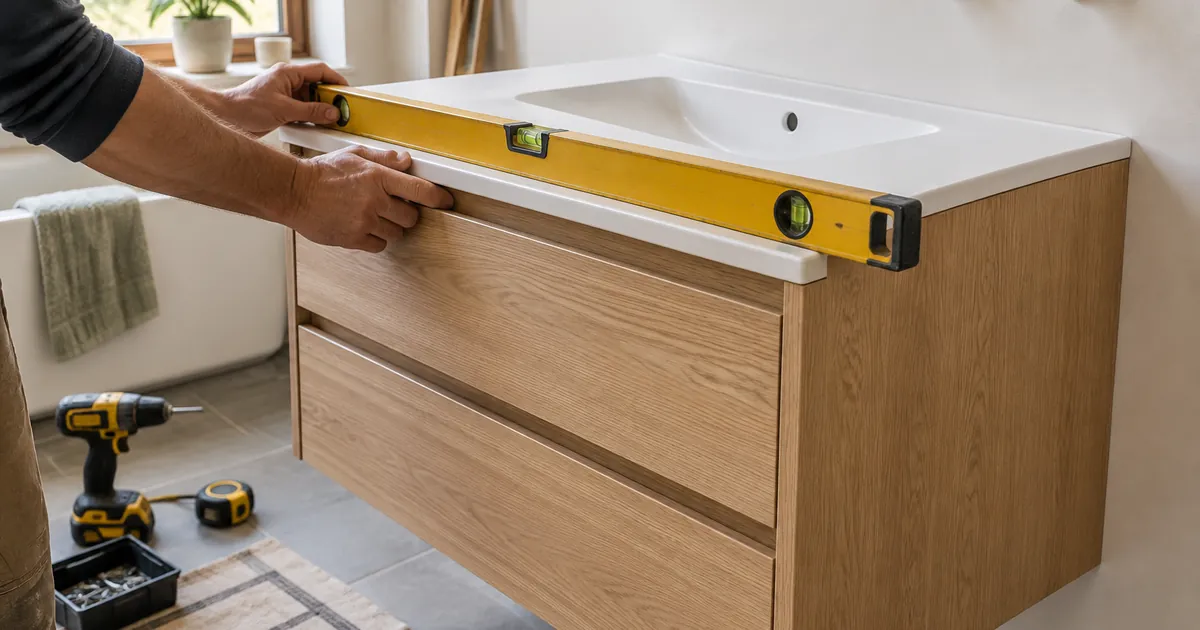
A floating vanity demands more before the cabinet ever arrives. The wall needs solid blocking — 2x lumber or engineered framing between studs — fastened to carry 100 to 200 pounds of cabinet, stone, and water. The rough-in plumbing usually gets raised so supplies and drain tuck neatly behind the suspended cabinet. In a remodel with open walls, that's trivial. In a finished bathroom, it means opening drywall, and that changes the project's size.
Weight capacity in practice
Properly blocked, a wall-mounted unit is rock solid — our solid oak floating vanity is engineered for exactly this install. Improperly blocked, any floating vanity becomes a warranty claim. If you can't open the wall, choose freestanding; no cabinet style is worth a failed mount.
Cleaning and Floor Space
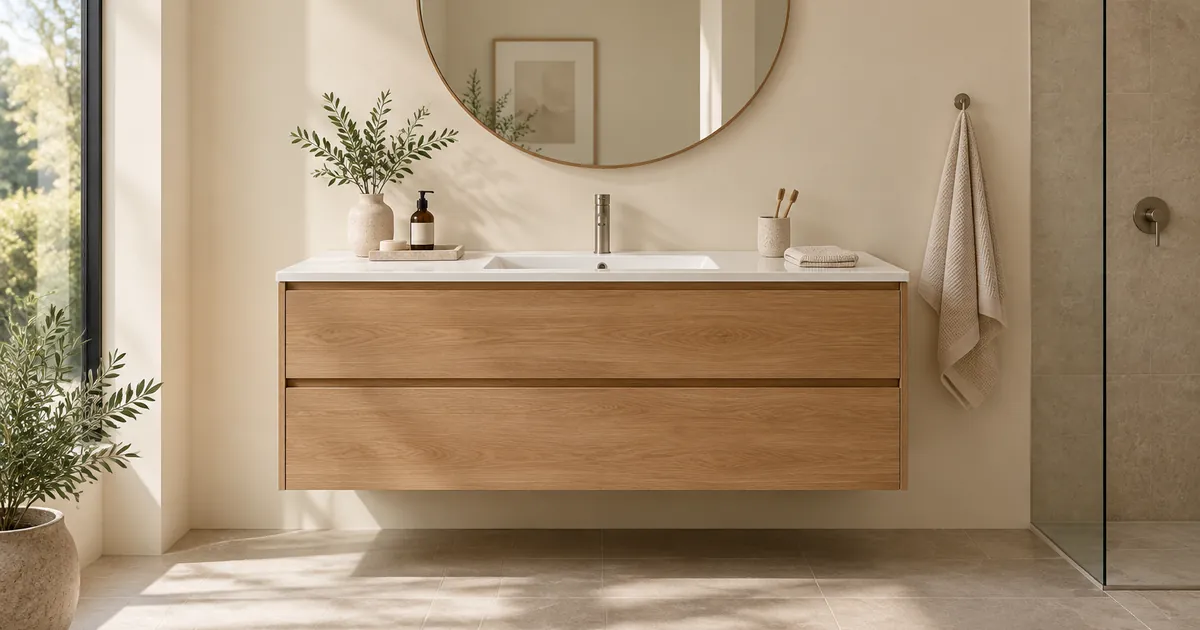
This is where floating vanities earn their premium. With the floor visible and reachable beneath the cabinet, mopping takes seconds and the room reads larger — the eye travels under the unit to the wall. Small bathrooms benefit most; a 36-inch floating vanity can make a tight floor plan feel a foot wider.
Freestanding cabinets have a base contact line that collects dust and hair, and the toe-kick area is awkward to clean. The trade: that base hides overflow protection. A slow leak under a floating cabinet drips straight onto the floor; a freestanding base can conceal a minor drip long enough for you to notice the water bill instead of a puddle.
Storage and Perceived Size
Floating cabinets often run slightly shallower drawers because the mounting frame consumes interior depth. Freestanding units — like our 36-inch black matte freestanding vanity — typically give you full-depth drawers and, in larger models, more total volume. If storage volume is your top priority, freestanding usually wins at equal width.
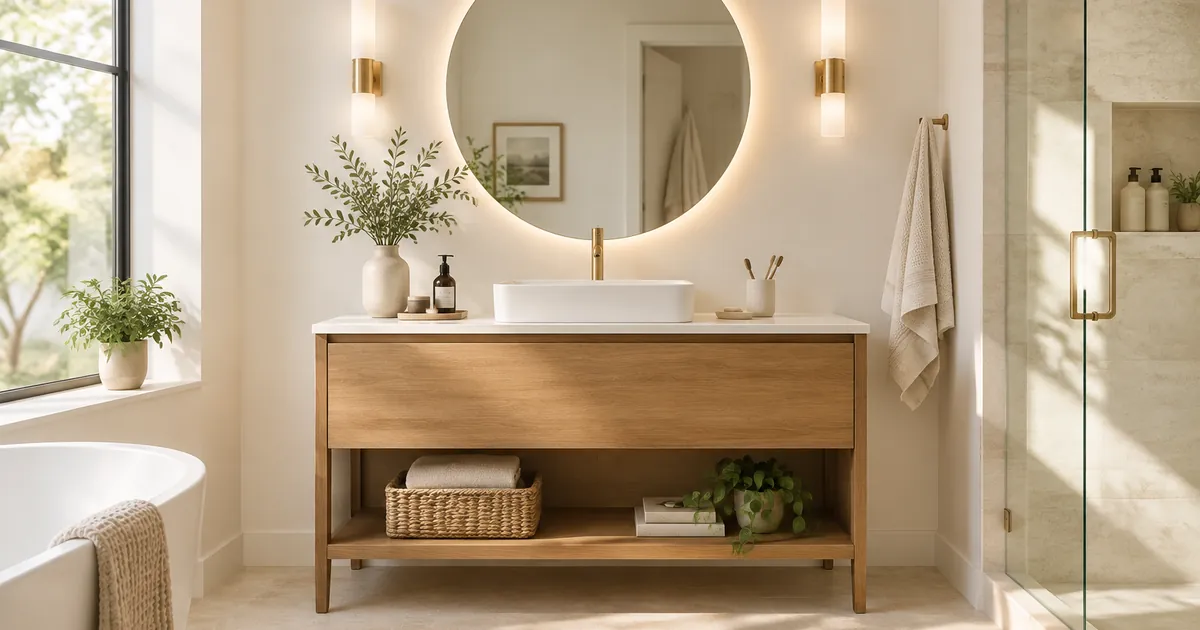
Visually, floating wins. The exposed floor band lightens the whole wall, pairs naturally with large-format tile, and suits modern and minimalist rooms. Freestanding suits traditional, transitional, and rustic spaces — a rustic oak freestanding vanity looks exactly where it belongs standing on the floor.
Cost and Effort Compared
- Cabinet price: comparable at equal size; floating units sometimes cost slightly more for the internal mounting frame.
- Install labor: freestanding is a DIY-friendly afternoon; floating with blocking is a two-person job or a plumber-plus-carpenter day.
- Remodel timing: floating is cheapest to add during a renovation with walls already open; freestanding is cheapest as a swap-in replacement.
How to Decide
Choose floating if: walls are already open or you're comfortable opening them, easy floor cleaning matters, the room is small and visual space matters, and your style leans modern. Start with the floating collection.
Choose freestanding if: you want a straightforward install without touching drywall, maximum drawer depth matters, the style is traditional or rustic, or you're replacing an existing vanity in place. Browse the freestanding collection.
And if the bathroom is genuinely tight — under 40 square feet — consider whether a corner vanity solves the layout better than either style.
The Bottom Line
Neither style is better; they solve different problems. Floating vanities trade installation effort for a cleaner floor plane and a bigger-feeling room. Freestanding vanities trade visual lightness for simpler installation and deeper storage. Measure first, check what's behind the wall second, and the right style picks itself.
Questions about a specific room? Send us the dimensions through the contact page — we answer sizing questions daily, and every order ships free within the United States.
Maintenance Differences Worth Knowing
The two styles also age differently. Freestanding cabinets take scuffs at the base where vacuum cleaners and mop handles strike them — a cosmetic issue that touch-up paint handles in minutes. Floating cabinets never touch the floor, but their mounting line needs an annual glance: the seal where cabinet meets wall should stay intact, and the unit should sit exactly as level as install day. Neither demand is heavy; they're just different habits.
Resale perception splits the same way. Buyers touring a house read a floating vanity as "recently renovated," while a quality freestanding unit in a traditional room reads as "well maintained." Match the style to the house's overall language and both work in your favor.
Accessibility and Long-Term Use
One more practical angle: aging in place. A wall-mounted unit can be installed higher — 36 inches or more — so it stays comfortable to use as household needs change, and the clear floor beneath accommodates a stool or wheelchair approach. A freestanding cabinet at standard height works fine for most, but it can't be adjusted after the fact. If you're planning a "forever" bathroom, floating has a functional edge beyond looks.