How to Clean and Maintain Your Bathroom Vanity
A vanity fails long before it wears out — usually from preventable things: standing water, harsh cleaners, a slow drip nobody noticed. Ten minutes of the right maintenance per week adds years to any cabinet, and each material has its own short list of rules. Here's the complete care picture for the four materials we build with.
The Habits That Matter for Every Vanity
Three habits do most of the work regardless of material:
- Wipe standing water. Water left pooled at the basin rim or against the backsplash is the enemy of every finish. A squeegee or cloth by the sink makes it a two-second habit.
- Ventilate. Run the bath fan during and 20 minutes after showers. Condensation that never dries eventually finds a seam.
- Fix drips immediately. A weeping supply line under the cabinet destroys floors and cabinet bases silently. Check under the sink monthly — it takes ten seconds.
Ceramic Basins and Tops
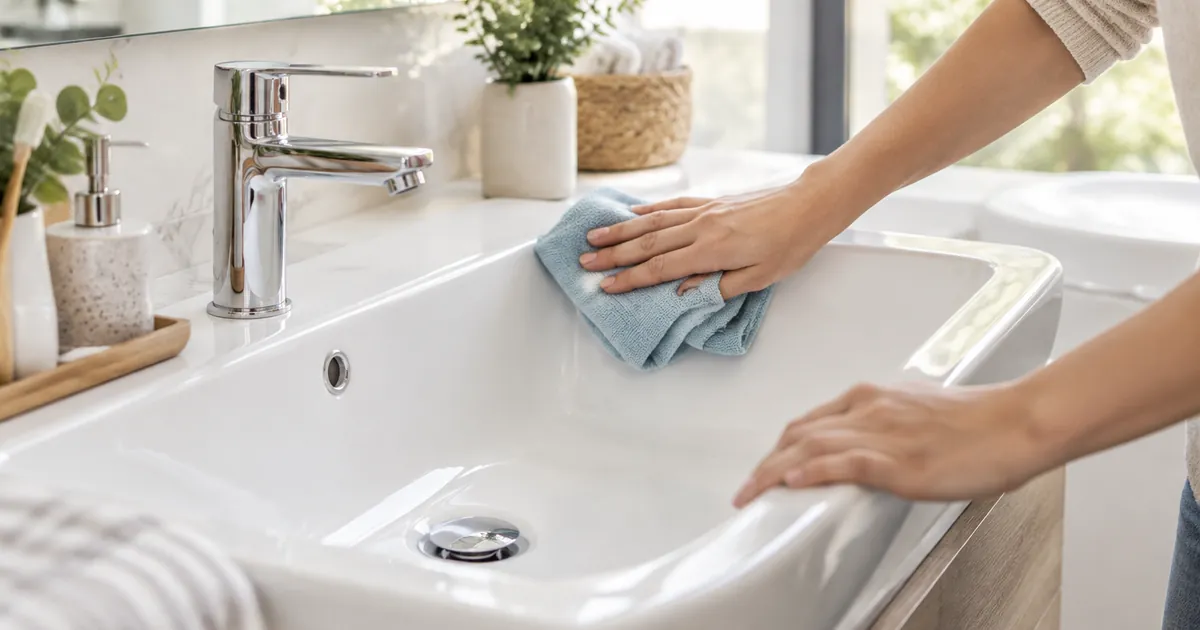
Ceramic wants the least and forgives the most. Weekly: warm water, a drop of dish soap, a soft cloth. Monthly: a non-abrasive cream cleanser for any film that soap leaves. Never use scouring pads or powder abrasives — they micro-scratch the glaze, and scratched glaze holds stains that intact glaze repels.
Hard-water spots dissolve with a 50/50 white vinegar and water soak on a paper towel, five minutes, then rinse. On an integrated ceramic vanity, the seamless basin-to-top transition means there's no caulk line to scrub — one of the quiet reasons integrated designs stay looking new.
Quartz Tops
Quartz care is nearly identical to ceramic: mild cleaner, soft cloth, no abrasives. Two quartz-specific rules: keep sustained heat off the surface (a curling iron flat on the edge can discolor the resin), and wipe dye-bearing products — hair dye, permanent markers — promptly, because long contact can stain the resin binder. The quartz-top vanity care card in the box repeats both rules.
Sealed Wood Cabinets
Wood's maintenance is about the seal, not the wood. Dust with a dry microfiber cloth weekly. Wipe splashes promptly — the finish handles brief contact easily, but standing water eventually finds a microscopic flaw. Every few months, inspect the seal at the water zones: basin rim, backsplash line, and around the faucet base. If water no longer beads on the surface, it's time to refresh.
Refreshing a water-based poly seal is a Saturday-morning task: light sand with 320-grit, wipe down, two thin coats. Avoid oil-soap cleaners (the dish-soap-and-vinegar internet recipes) — they leave residue that dulls the finish and can soften some seals. Our rustic oak vanity and solid oak floating vanity both ship with finish-specific care cards.
Sealed Concrete
Concrete care is sealer care. Clean with pH-neutral cleaner and a soft cloth — never vinegar or acidic bathroom sprays, which etch the sealer. Reseal every 12 to 24 months depending on use: clean, dry, apply a penetrating sealer per the label, wipe excess. Thirty minutes, once or twice a year, and the concrete vanity top keeps its matte, monolithic look indefinitely.
Stains happen at the sealer's weak moments: hair dye, oil, and colored toothpaste left overnight. Blot promptly and most lift completely; a stubborn spot lifts with a poultice of baking soda and water under plastic wrap overnight.
Hardware, Hinges, and Drains
Twice a year: wipe hinge and slide hardware with a dry cloth, and add a drop of household oil to soft-close hinge arms if they start feeling gritty. Check the P-trap and supply connections for weeping — hand-tighten anything loose. Clean the faucet aerator by unscrewing its tip and rinsing the screen; mineral buildup there mimics "low water pressure" and costs nothing to fix.
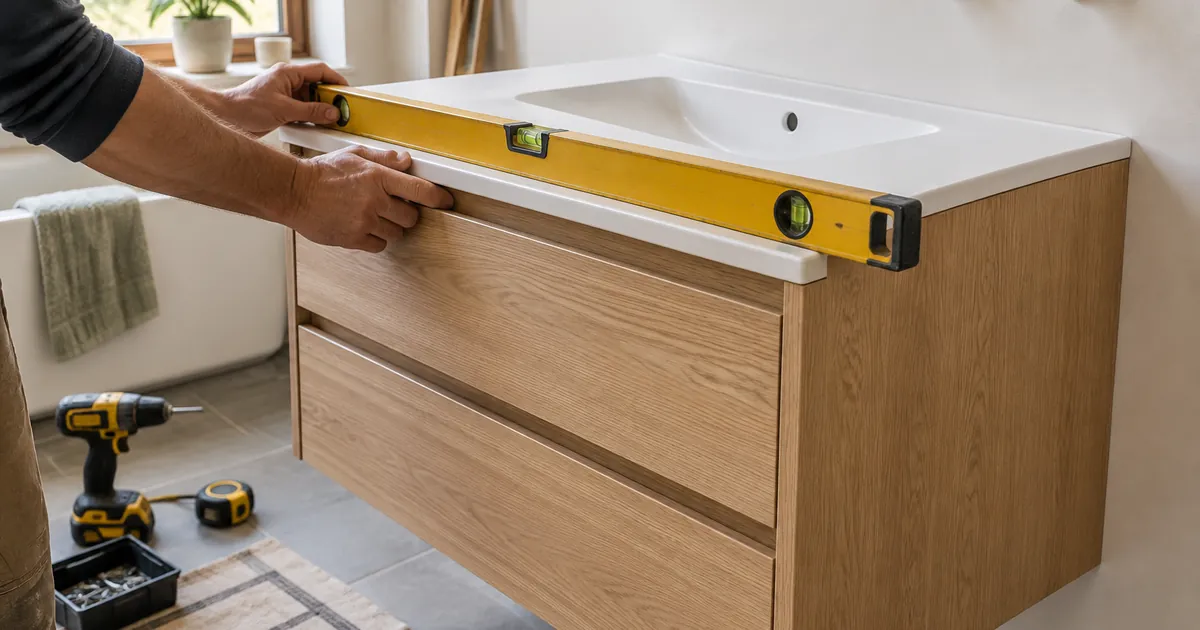
On floating vanities, also glance at the mounting line annually: the wall joint should stay sealed and the cabinet should sit exactly as level as install day.
A Simple Annual Schedule
- Weekly: mild-soap wipe of basin and counter; dry the rim
- Monthly: under-sink leak check; hard-water spot treatment as needed
- Twice yearly: hardware wipe-down; aerator clean; seal inspection on wood
- Yearly: reseal concrete; refresh wood seal if water stops beading
Follow that cadence and a quality vanity outlives the bathroom's paint cycles several times over. Care cards ship in the box with every Sviv vanity, and our team answers care questions year-round through the contact page. Free shipping on every US order.